

008615063091883
 English
-
 English
 -
عربي
-
Deutsch
-
Русский язык
-
Français
-
Latina
-
Português
-
Español


info@kingstar-glass.com

KINGSTAR GLASS
Curved Insulated Glass | High-Performance Bent IGU for Architectural Facades and Roofs from KINGSTAR BUILDING GLASS
KINGSTAR BUILDING GLASS Curved Insulated Glass is a high-performance bent insulating glass unit (IGU) engineered for architectural applications requiring curved glazing with superior thermal insulation and solar control. Constructed from two or more curved glass panes separated by a sealed air space filled with argon or krypton gas, our curved IGUs deliver exceptional thermal performance with U-values as low as 0.91 W/m²K. Available in single-curve, double-curve, and complex geometries including
What is Curved Insulated Glass?
Curved insulated glass, also known as bent IGU or curved insulating glass unit, is a high-performance glazing product consisting of two or more curved glass panes separated by a sealed air space. The glass panes are bent to a specific radius using hot or cold bending techniques, then assembled into an insulating glass unit with a spacer system, desiccant, and dual-seal construction.
Curved insulated glass combines three key technologies:
Bent Glass: Glass panes are curved to precise radii using hot bending or cold bending techniques. Hot bending uses heat (550-620°C) to shape glass over molds; cold bending forces flat glass into curved positions during installation or lamination.
Low-E Coating: A microscopically thin, transparent coating applied to one of the interior surfaces (typically surface 2 or 3) that reflects long-wave infrared heat while allowing visible light to pass through. Coatings such as Guardian SunGuard SN 68 can be applied to bent glass and are bendable.
Insulating Air Space: The sealed space between glass panes, filled with argon or krypton gas, provides thermal insulation by reducing conductive and convective heat transfer.
Curved Insulated Glass Manufacturing
Hot Bending
Hot bending uses heat to create the curved shape and accounts for approximately 95% of all glass bending. Glass is heated to approximately 550-620°C and shaped using steel molds or through a heat treatment bending quench. Cooling can be done naturally to obtain annealed glass or rapidly quenched to produce tempered glass. Hot bending is suitable for most architectural applications including single-curve and complex geometries.
Cold Bending
Cold bending forces flat glass into a curved position during installation or through lamination, without significant heat. The process uses external stressing to convert the glass into out-of-plane geometry and constrain it in that state permanently using the glazing framing system. Cold bending can be performed after glass has been tempered. This method offers a more sustainable and cost-efficient alternative to hot bending.
Cold Lamination Bending
Individual flat glass panes are stacked with interlayers and forced into a bent shape, then laminated in an autoclave. The combination of pressure and temperature in the autoclave locks in the curvature through shear stress in the interlayer. This method was first implemented by sedak in 2006 and has been used in complex projects including an s-curve insulated glass unit with double curvature.
Key Features
- Architectural design freedom: Available in single-curve, double-curve, concave, convex, and free-form geometries.
- Superior thermal insulation: Low-E coatings and argon gas fill achieve U-values as low as 0.91 W/m²K.
- Solar control: Low-E and solar control coatings reduce solar heat gain and glare.
- Structural strength: Curved shape minimizes deflections and offers high load resistance.
- Safety: Tempered and laminated bent glass options available with post-breakage integrity.
- UV protection: Low-E coatings reduce UV transmission, protecting interiors from fading.
- Acoustic insulation: Dual-pane or triple-pane construction provides sound reduction.
- Custom geometries: Single-curve, double-curve, spherical, and free-form configurations available.
Curved Insulated Glass Configurations
KINGSTAR BUILDING GLASS offers curved insulated glass in multiple configurations:
| Configuration | Composition | Typical U-Value | Best For |
|---|---|---|---|
| Double Glazed IGU | Two curved panes + one air space | As low as 1.1 W/m²K | Standard facades, commercial buildings |
| Triple Glazed IGU | Three curved panes + two air spaces | As low as 0.91 W/m²K | High-performance facades, energy-efficient buildings |
| Laminated IGU | Laminated inner pane + IGU construction | 1.0-1.5 W/m²K | Safety-critical applications, overhead glazing |
| Curved Laminated IGU | Bent laminated glass + insulating spacer | 1.0-1.5 W/m²K | Frameless and structural applications |
Geometry Options
Radius and Size Capabilities
| Parameter | Specification |
|---|---|
| Minimum Radius (Hot Bent) | From 350mm (for thinner glass) to 1500mm (for 10-12mm glass) |
| Glass Thickness Range | 4mm to 19mm per pane |
| Maximum Panel Size | Up to 3300mm × 6000mm (varies by curvature and thickness) |
| Total IGU Thickness | 16mm to 50mm |
| Gas Fill | Air, Argon (90% + 10% air), Krypton |
Standards and Code Compliance
KINGSTAR BUILDING GLASS Curved Insulated Glass complies with major international building codes and standards:
- EN 1279-1: Glass in building — Insulating glass units — Part 1: Generalities (includes specific provisions for curved insulating glass units)
- EN 12150: Thermally toughened soda lime silicate safety glass
- EN 12600: Pendulum test — Impact test method and classification
- EN 1096: Glass in building — Coated glass
- ASTM C1048: Standard Specification for Heat-Treated Flat Glass
- IBC (International Building Code): Safety glazing requirements for hazardous locations
Applications
Exterior Architectural Applications:
- Curved building facades and curtain walls
- Undulating glass facades with convex and concave elevations
- Glass roofs and skylights
- Atriums and interior courtyards
- Glass canopies and entrance covers
- Spherical and domed structures
- High-rise building corners and curved elevations
Commercial Buildings:
- Office towers and corporate headquarters
- Hotels and hospitality venues
- Shopping centers and retail stores
- Museums and exhibition halls
- Airport terminals
Residential Applications:
- Curved glass home extensions and conservatories
- Residential skylights and roof windows
- Curved glass facades for luxury homes
Specialty Applications:
- Atrium glass roofs
- Curved glass staircases and balustrades
- Custom architectural features
Why Choose KINGSTAR BUILDING GLASS Curved Insulated Glass?
- Architectural design freedom: Single-curve, double-curve, and free-form geometries available.
- Superior thermal performance: Achieves U-values as low as 0.91 W/m²K with triple glazing and low-E coatings.
- Advanced bending technology: Hot bending, cold bending, and cold lamination bending options.
- Solar control: Low-E and solar control coatings reduce solar heat gain and glare.
- Safety options: Tempered and laminated bent glass available.
- Complete processing: Cutting, bending, tempering, coating, laminating, and IGU assembly under one roof.
- Custom solutions: Custom radii, sizes, geometries, and performance specifications available.
- 10 years of industry expertise: With a decade of dedicated experience in glass manufacturing and export, KINGSTAR BUILDING GLASS has delivered curved glass solutions to projects across North America, Europe, the Middle East, and Southeast Asia.
- Quality assurance: Strict quality control from raw material selection to final packaging, ensuring consistent curvature, precise dimensions, and reliable performance.
Ready to specify high-performance curved insulated glass for your next architectural project? Share your requirements with our technical team for custom curved insulated glass solutions. We will provide curvature recommendations, thermal performance calculations, structural data, and a competitive quote tailored to your project requirements, backed by a decade of glass manufacturing expertise.
Frequently Asked Questions (FAQ)
Q1: What is the difference between hot bent and cold bent insulated glass?
A: Hot bending uses heat (550-620°C) to shape glass over molds and accounts for approximately 95% of all glass bending. It is suitable for most architectural applications including single-curve and complex geometries. Cold bending forces flat glass into a curved position during installation or through lamination, without significant heat. Cold bending can be performed after glass has been tempered and offers a more sustainable, cost-efficient alternative. Hot bent glass holds its shape permanently; cold bent glass is held in position by the framing system or lamination.
Q2: What U-values and thermal performance can curved insulated glass achieve?
A: KINGSTAR BUILDING GLASS curved insulated glass can achieve U-values as low as 0.91 W/m²K in triple glazed configurations with low-E coatings and argon gas fill. Double glazed configurations typically achieve U-values of 1.1 W/m²K or lower. Performance can be tailored through coating selection, gas fill, and number of panes. Low-E coatings such as Guardian SunGuard SN 68 can be applied to bent glass and are bendable.
Q3: What geometries and radii are available for curved insulated glass?
A: KINGSTAR BUILDING GLASS offers curved insulated glass in single-curve (cylindrical), double-curve (spherical), concave, convex, and free-form geometries. Minimum radius depends on glass thickness: for 6mm glass, minimum radius is approximately 1200mm; for 10-12mm glass, minimum radius is typically around 1500mm; thinner glass can achieve radii as low as 350mm. Maximum panel size is up to 3300mm × 6000mm, varying by curvature and thickness.
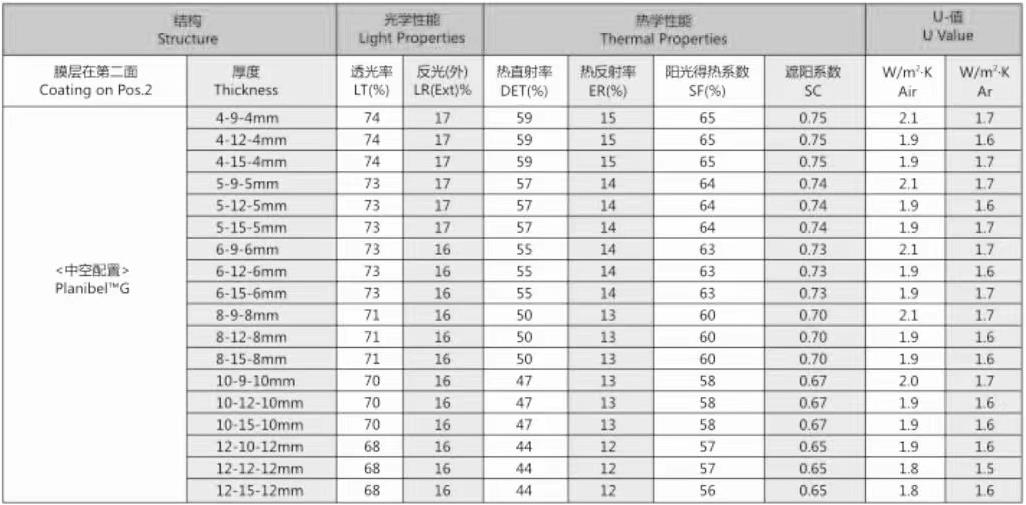
Insulated glass is a glass assembly composed of two or more pieces of glass, evenly separated by effective support, sealed with a binder around the glass layer to form a dry gas space between the glass layers.Glass components can be made of clear glass, tinted glass, reflective glass, laminated glass, tempered glass, etc.according to customer's request.
Its excellent efficiency in solar heat insulation, greatly reduces cooling loads.
Dry air inside the enclosure renders the surface free from misting.
More excellent efficiency will be if fill in argon or other inert gases.rom misting.
Glass Thickness 3-19mm
Spacer Thickness 6A,9A,12A,16A,24A.etc
Spacer Material Aluminum, Stainless, Warm edge, TPS, 4SG
Size Min.200x300mm, Max.3300mmx13000mm, custom sizes
Glass options Low-E tempered glass, ultra clear glass, tinted glass, solar reflective glass etc

Kingstar Building glass: www.kingstar-glass.com
Kinstar Glassware (Professional Glassware & Kitchen Storage): www.kingstarliving.com


Kingstar Building glass:
Email: eric@kingstar-glass.com
Kingstar Glassware
(Professional Glassware & Kitchen Storage):
Email: info@kingstar-glass.com
Address: NO.101 SHENZHEN ROAD, QINGDAO, CHINA
© 2022 Qingdao Kingstar Glass Co., Ltd . All rights reserved Site Map | Technical Support:weidongli
Building glass:
Wechat/Whatsapp: 008618562697682
Email: eric@kingstar-glass.com
Glassware please visit: www.kingstarliving.com
Wechat/Whatsapp: 008615063091883
Email: info@kingstar-glass.com
Address: NO.101 SHENZHEN ROAD, QINGDAO, CHINA

© 2022 Qingdao Kingstar Glass Co., Ltd . All rights reserved Site Map
