

008615063091883
 English
-
 English
 -
عربي
-
Deutsch
-
Русский язык
-
Français
-
Latina
-
Português
-
Español


info@kingstar-glass.com

KINGSTAR GLASS
Tinted Insulated Glass Wall | High-Performance Architectural Glazing with Solar Control from KINGSTAR BUILDING GLASS
KINGSTAR BUILDING GLASS Tinted Insulated Glass Wall is a high-performance architectural glazing solution that combines the aesthetic appeal of body-tinted float glass with the thermal and solar control benefits of an insulating glass unit (IGU). Each IGU consists of two or more panes of glass separated by a sealed air space, with the exterior pane typically featuring a tinted glass substrate and a low-emissivity (low-E) coating applied to the second surface for enhanced energy performance. The t
What is a Tinted Insulated Glass Wall?
A tinted insulated glass wall is a high-performance glazing system constructed from insulating glass units (IGUs) that incorporate body-tinted glass as one or more of the panes. Body-tinted glass, also known as heat-absorbing glass, contains pigments that absorb solar radiation, reducing the amount of solar heat transmitted into the building. When combined with low-E coatings and argon gas fills within an IGU, tinted glass walls deliver exceptional thermal insulation and solar control performance.
Tinted insulated glass walls are commonly used in curtain wall systems, storefronts, and large-scale commercial glazing applications. The tinted glass provides a uniform, consistent exterior appearance while helping to control glare and solar heat gain.
How Tinted Insulated Glass Walls Work
Tinted insulated glass walls combine three key technologies:
Body-Tinted Glass: The glass substrate itself contains metal oxides that absorb solar energy. Different tints offer varying levels of light transmission and solar control. Green tinted glass allows a higher portion of visible light to pass through while absorbing a greater portion of infrared light, whereas gray tinted glass provides higher solar heat reduction.
Low-E Coating: A microscopically thin, transparent coating applied to one of the interior surfaces of the IGU (typically surface 2 or 3) that reflects long-wave infrared heat while allowing visible light to pass through. This significantly reduces heat transfer through the glass wall.
Insulating Air Space: The sealed air space between glass panes, typically filled with argon or other inert gases, provides thermal insulation by reducing conductive and convective heat transfer.
Tinted Glass Color Options
Key Features
- Solar heat control: Tinted glass absorbs solar radiation, reducing cooling loads.
- Thermal insulation: Low-E coatings and argon gas fills reduce heat transfer.
- Glare reduction: Tinted glass minimizes uncomfortable glare while maintaining daylight.
- Uniform appearance: Consistent color across large glazed areas.
- Energy savings: Reduces cooling energy consumption.
- Aesthetic versatility: Available in bronze, gray, green, and blue.
- Code compliant: Meets EN 12150 and ASTM E 774 standards.
- Safety: Heat-strengthened or fully tempered options available.
- Thermal breakage prevention: Tinted glass should be heat-strengthened or tempered to prevent breakage from high solar heat absorption.
Performance Data
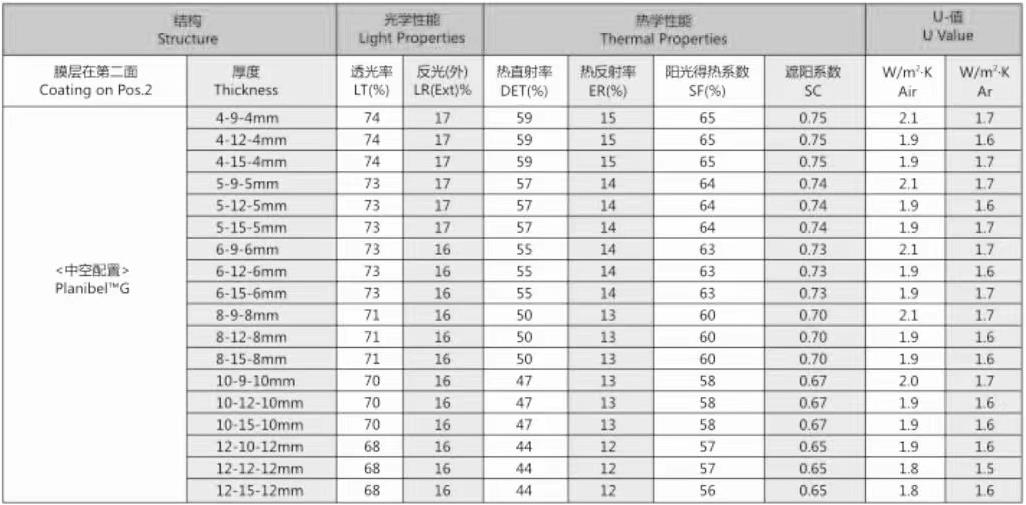
Typical Performance Values for Tinted Insulating Glass Units
| Configuration | VLT | SHGC | U-Value Winter | U-Value Summer |
|---|---|---|---|---|
| Gray Tinted IGU (uncoated) | 44% | 0.58 | 0.47 | 0.50 |
| Gray Tinted IGU + Low-E (Solarban 60) | 35% | 0.29 | 0.29 | 0.27 |
| Bronze Tinted IGU + Low-E | 39% | 0.28 | 0.28 | 0.26 |
| Blue Tinted IGU + Low-E (Solarban 70XL) | 30% | 0.18 | 0.28 | 0.26 |
| Gray Tinted + Triple-Silver Low-E (SNX 62/27) | 44% | 0.21 | 0.25 | 0.23 |
Based on 1/4' (6mm) glass + 1/2' (13mm) argon-filled air space + 1/4' (6mm) glass configuration. SHGC = Solar Heat Gain Coefficient. VLT = Visible Light Transmittance.
Technical Specifications
Standards and Code Compliance
KINGSTAR BUILDING GLASS Tinted Insulated Glass Walls comply with major international building codes and standards:
- EN 1279: Glass in building — Insulating glass units
- EN 1096: Glass in building — Coated glass
- EN 12150: Thermally toughened soda lime silicate safety glass
- EN 12600: Pendulum test — Impact test method and classification
- ASTM E 774: Standard Specification for Sealed Insulating Glass Units
- IBC (International Building Code): Safety glazing requirements for hazardous locations
Important Processing Considerations
- Tinted glass absorbs more solar energy than clear glass and is therefore subject to higher thermal stresses. Heat-strengthening or full tempering is recommended, especially on south and west elevations.
- For spandrel applications, tinted insulated glass panels can be used to match vision glass areas.
- Bronze tinted glass pairs well with bronze anodized spacers unless warm-edge spacers are specified.
Applications
Exterior Architectural Applications:
- Curtain walls and building facades
- Storefronts and commercial windows
- Atriums and skylights
- Spandrel glass panels
- High-rise building glazing
Commercial Buildings:
- Office towers and corporate headquarters
- Hotels and hospitality venues
- Retail stores and shopping centers
- Healthcare facilities
Residential Applications:
- Large windows and sliding glass doors
- Home extensions and sunrooms
Why Choose KINGSTAR BUILDING GLASS Tinted Insulated Glass Wall?
- Solar heat control: Tinted glass absorbs solar radiation, reducing cooling loads and energy costs.
- Thermal insulation: Low-E coatings and argon gas fills provide superior U-values.
- Aesthetic versatility: Available in bronze, gray, green, and blue to complement any architectural design.
- Glare reduction: Creates a comfortable indoor environment with reduced eye strain.
- Uniform appearance: Consistent color across large glazed areas.
- Safety certified: Heat-strengthened or fully tempered options available.
- Complete processing: Cutting, tempering, coating, and IGU assembly under one roof.
- Custom solutions: Custom sizes, tints, and performance specifications available.
- 10 years of industry expertise: With a decade of dedicated experience in glass manufacturing and export, KINGSTAR BUILDING GLASS has delivered tinted insulated glass solutions to projects across North America, Europe, the Middle East, and Southeast Asia.
- Quality assurance: Strict quality control from raw material selection to final packaging, ensuring consistent color, reliable performance, and precise dimensions.
Ready to specify high-performance tinted insulated glass walls for your next architectural project? Share your requirements with our technical team for custom tinted insulated glass wall solutions. We will provide color samples, performance data, thermal calculations, and a competitive quote tailored to your project requirements, backed by a decade of glass manufacturing expertise.
Frequently Asked Questions (FAQ)
Q1: What is the difference between tinted insulated glass and clear insulated glass?
A: Tinted insulated glass uses body-tinted glass as one or more of the panes in the IGU. The tint contains pigments that absorb solar radiation, reducing solar heat gain and glare compared to clear glass. Tinted glass also provides a distinctive exterior appearance. Clear insulated glass offers higher visible light transmission but less solar control. Tinted glass is particularly beneficial in cooling-dominated climates or buildings with significant internal cooling demand.
Q2: What tint colors are available for insulated glass walls?
A: KINGSTAR BUILDING GLASS offers tinted insulated glass walls in bronze, gray, green, and blue. Bronze provides a warm, rich appearance; gray offers a cool, neutral aesthetic; green delivers a natural look with higher light transmission; and blue provides a cool, contemporary aesthetic. Custom colors are available upon request.
Q3: Can tinted insulated glass be tempered, and why is tempering recommended?
A: Yes, tinted glass can be tempered. In fact, heat-strengthening or full tempering is strongly recommended for tinted glass, especially on south and west elevations. Tinted glass absorbs more solar energy than clear glass, which creates higher thermal stresses. Tempering increases the glass's resistance to thermal breakage and improves its impact resistance, making it safer and more durable for architectural applications.
Insulated glass is a glass assembly composed of two or more pieces of glass, evenly separated by effective support, sealed with a binder around the glass layer to form a dry gas space between the glass layers.Glass components can be made of clear glass, tinted glass, reflective glass, laminated glass, tempered glass, etc.according to customer's request.
Its excellent efficiency in solar heat insulation, greatly reduces cooling loads.
Dry air inside the enclosure renders the surface free from misting.
More excellent efficiency will be if fill in argon or other inert gases.rom misting.
Glass Thickness 3-19mm
Spacer Thickness 6A,9A,12A,16A,24A.etc
Spacer Material Aluminum, Stainless, Warm edge, TPS, 4SG
Size Min.200x300mm, Max.3300mmx13000mm, custom sizes
Glass options Low-E tempered glass, ultra clear glass, tinted glass, solar reflective glass etc

Kingstar Building glass: www.kingstar-glass.com
Kinstar Glassware (Professional Glassware & Kitchen Storage): www.kingstarliving.com


Kingstar Building glass:
Email: eric@kingstar-glass.com
Kingstar Glassware
(Professional Glassware & Kitchen Storage):
Email: info@kingstar-glass.com
Address: NO.101 SHENZHEN ROAD, QINGDAO, CHINA
© 2022 Qingdao Kingstar Glass Co., Ltd . All rights reserved Site Map | Technical Support:weidongli
Building glass:
Wechat/Whatsapp: 008618562697682
Email: eric@kingstar-glass.com
Glassware please visit: www.kingstarliving.com
Wechat/Whatsapp: 008615063091883
Email: info@kingstar-glass.com
Address: NO.101 SHENZHEN ROAD, QINGDAO, CHINA

© 2022 Qingdao Kingstar Glass Co., Ltd . All rights reserved Site Map
