

008615063091883
 English
-
 English
 -
عربي
-
Deutsch
-
Русский язык
-
Français
-
Latina
-
Português
-
Español


info@kingstar-glass.com
Choosing the Right Mirror for Your Bathroom: A Practical Guide for Modern Projects
Author:KINGSTAR GLASS
Click:
Time:2025-12-16 14:57:06
Bathroom mirrors are no longer simple reflective surfaces. In contemporary residential, hospitality, and commercial projects, mirrors contribute to lighting efficiency, spatial perception, durability, and overall design quality. Choosing the right bathroom mirror requires careful consideration of material quality, coating technology, moisture resistance, safety standards, and long-term performance. For architects, developers, and distributors, mirror selection directly impacts product lifespan, maintenance costs, and user experience.
Understanding Bathroom Mirror Requirements
A bathroom environment presents unique challenges compared to other interior spaces. High humidity, temperature fluctuations, and frequent cleaning demand mirrors with stable coatings and corrosion resistance. A high-quality bathroom mirror is defined by consistent reflectivity, minimal distortion, and resistance to edge blackening and oxidation.
Modern buyers increasingly search for solutions such as copper-free mirrors, silver-backed mirrors, anti-corrosion bathroom mirrors, and custom-sized mirrors for hotel and residential projects. These search behaviors reflect a shift toward long-term durability and quality assurance rather than basic appearance alone.
Mirror Types Commonly Used in Bathroom Applications
Different mirror constructions serve different functional and commercial needs. Understanding their characteristics helps buyers select the correct option for each project type.
Common Bathroom Mirror Types and Performance
| Mirror Type | Reflectivity Level | Moisture Resistance | Typical Applications |
|---|---|---|---|
| Aluminum Mirror | 85–88% | Moderate | Budget residential projects |
| Silver Mirror | 92–95% | High | Hotels, premium residential |
| Copper-Free Mirror | 92–95% | Very high | Coastal areas, luxury bathrooms |
| Safety-Backed Mirror | 90–94% | High | Public spaces, hospitality |
| LED Bathroom Mirror | 90–95% | High | Smart bathrooms, retail |
Copper-free silver mirrors are increasingly preferred for bathroom use due to their superior resistance to corrosion and longer service life under humid conditions.

Key Performance Factors Buyers Should Evaluate
Bathroom mirror performance is measured by more than visual clarity. B2B buyers typically assess mirrors based on several technical indicators that affect installation quality and long-term use.
Critical Selection Criteria
- Reflective coating uniformity
- Anti-corrosion and moisture resistance
- Edge sealing quality
- Glass thickness and flatness
- Safety backing availability
- Compatibility with lighting systems
Professional projects often specify mirrors with protective paint layers and sealed edges to reduce oxidation risks over time.
Mirror Thickness and Structural Stability
Mirror thickness directly affects durability, installation safety, and perceived quality. Thicker mirrors provide better flatness and resistance to deformation, especially for large-format installations.
Recommended Mirror Thickness by Application
| Application Area | Recommended Thickness | Reason |
|---|---|---|
| Residential Bathrooms | 4–5 mm | Balanced cost and durability |
| Hotel Bathrooms | 5–6 mm | Frequent use, higher quality standard |
| Public & Commercial | 6 mm or above | Safety and structural stability |
| Large Wall Mirrors | 6–8 mm | Prevents distortion and vibration |
Selecting the correct thickness helps reduce breakage risk during transport and installation.
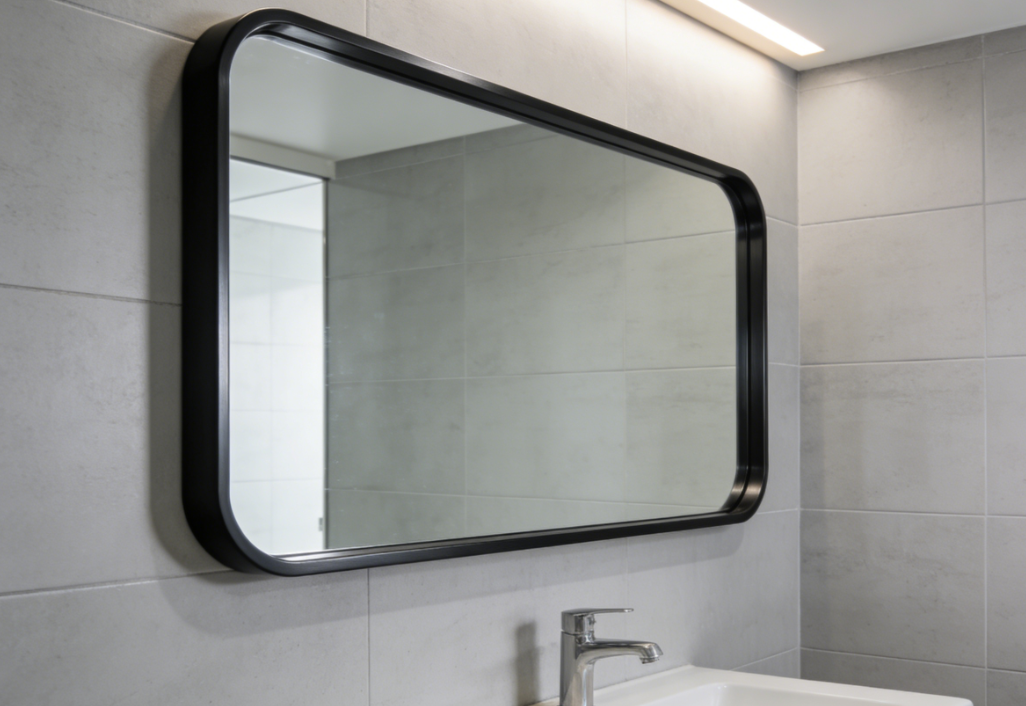
Design, Lighting, and Space Enhancement
Bathroom mirrors play a significant role in enhancing brightness and visual space. Well-positioned mirrors can improve perceived room size and reflect natural or artificial light efficiently. In commercial hospitality projects, mirrors contribute to brand image and guest comfort.
LED-integrated mirrors and polished-edge designs are increasingly popular for modern bathrooms, offering both functional lighting and aesthetic value. Neutral color reflection and accurate color rendering are particularly important in grooming and hospitality environments.
Manufacturing Quality and Supply Reliability
For wholesalers, contractors, and project developers, consistent production quality is as important as product design. Advanced mirror manufacturing involves precision float glass, automated coating processes, and strict quality inspections.
KINGSTAR GLASS supplies bathroom mirrors engineered for durability, clarity, and stable performance. With copper-free silver mirror options, safety backing, and custom sizing capabilities, KINGSTAR GLASS supports residential, hotel, and commercial bathroom projects with reliable production standards and scalable supply capacity.
Choosing a Long-Term Mirror Solution
Selecting the right bathroom mirror is a strategic decision that balances cost, durability, aesthetics, and maintenance. High-quality mirrors reduce replacement frequency, improve user satisfaction, and enhance overall project value. For modern developments, mirrors should be treated as functional architectural elements rather than decorative afterthoughts.
FAQs
What is the best mirror type for high-humidity bathrooms?
Copper-free silver mirrors offer superior resistance to corrosion and are ideal for humid or coastal environments where moisture exposure is constant.
Does mirror thickness affect image quality?
Yes. Thicker mirrors generally provide better flatness and reduced distortion, especially for large-format or wall-mounted installations.
Can bathroom mirrors be customized for commercial projects?
Yes. Custom sizing, edge treatments, safety backing, and LED integration are commonly available. KINGSTAR GLASS supports customized mirror solutions for hotels, residential developments, and retail projects.

点击右上角
分享给朋友吧







 Long by picture save/share
0
Prev : The History of Mirrors: From Ancient Times to Modern DayNext : Patterned Glass: Adding Texture and Privacy to Modern Architectural Design
文章推荐

Kingstar Building glass: www.kingstar-glass.com
Kinstar Glassware (Professional Glassware & Kitchen Storage): www.kingstarliving.com


Kingstar Building glass:
Email: eric@kingstar-glass.com
Kingstar Glassware
(Professional Glassware & Kitchen Storage):
Email: info@kingstar-glass.com
Address: NO.101 SHENZHEN ROAD, QINGDAO, CHINA
© 2022 Qingdao Kingstar Glass Co., Ltd . All rights reserved Site Map | Technical Support:weidongli
Building glass:
Wechat/Whatsapp: 008618562697682
Email: eric@kingstar-glass.com
Glassware please visit: www.kingstarliving.com
Wechat/Whatsapp: 008615063091883
Email: info@kingstar-glass.com
Address: NO.101 SHENZHEN ROAD, QINGDAO, CHINA

© 2022 Qingdao Kingstar Glass Co., Ltd . All rights reserved Site Map
